
Ref Base – Mentor Evaluations
Mentee Name
Kennidee Smith
Mentee Email
refassignor@dukecity.org
Mentor Name
Jeremy Vehar
Mentor Email
jdvxc75@gmail.com
The person who was mentored was in this position
Center Referee,,
Position of Mentee
Date / Time of Match
03/30/2024 10:30 AM
Field Location of Match
SC 13 N
Positioning/Movement
2 = Satisfactory
Positioning along touchline during active play and staying at the offside line
Positioning/Movement Comments
Your movement and positioning was pretty good most of the game. I would like to see you be closer to play when the ball is inside the penalty area, and take wider positions (keep the play between you and your AR).
We discussed positioning on Penalty Kicks, Corner Kicks, and Free Kicks in the attacking third... in all three cases, stay to the left of the penalty mark and/or penalty arc, so that you don't turn your back to the AR, and aren't looking at the same thing they are.
We discussed staying out of the center circle unless you have to pass through it (but don't take up a static position inside). You were hit with the ball twice because teams tried to play through that space, and you were right there.
We discussed positioning on Penalty Kicks, Corner Kicks, and Free Kicks in the attacking third... in all three cases, stay to the left of the penalty mark and/or penalty arc, so that you don't turn your back to the AR, and aren't looking at the same thing they are.
We discussed staying out of the center circle unless you have to pass through it (but don't take up a static position inside). You were hit with the ball twice because teams tried to play through that space, and you were right there.
Decision Making/Rules Application:
1 = Good
Decision Making/Rules Application: Comments
Players accepted your decisions. Your PK decisions were decisive. I didn't get a good look at the first one you called (handball), but the 2nd one (tripping) was 100% correct.
Remember, if you decide to stop play and restart with a drop ball... drop the ball to the team that was in possession when play was stopped. Drop balls are no longer contested. Also, drop the ball from your waist and let it hit the ground... don't throw up into the air.
You did a good job recognizing that one of your AR's was going to provide limited help with offside decisions, and you were confident and decisive with those calls even without the AR's help.
Remember, if you decide to stop play and restart with a drop ball... drop the ball to the team that was in possession when play was stopped. Drop balls are no longer contested. Also, drop the ball from your waist and let it hit the ground... don't throw up into the air.
You did a good job recognizing that one of your AR's was going to provide limited help with offside decisions, and you were confident and decisive with those calls even without the AR's help.
Interaction with Team
1 = Good
Interaction with Team Comments
Players and coaches accepted your decisions. You did a nice job managing injuries, showing concern and care for the players.
There was one injury, you might remember, when the goal keeper got hit in the head with a shot on goal... you stopped play and briefly checked on the goal keeper (from a distance) to see if she was OK. She gave you the thumbs up, and you waved the coaches back to their bench and restarted play. With MOST injuries, that was the perfect way to handle it... however, on this one, because it was a head injury, I wouldn't just take the goal keeper's word for it... stop the game and go check on her closely... or allow the coach to enter for a closer inspection. Head injuries, especially, players don't always know how hard they got hit, or how they were affected by it. It's worth taking the extra time to be sure she is OK.
There was one injury, you might remember, when the goal keeper got hit in the head with a shot on goal... you stopped play and briefly checked on the goal keeper (from a distance) to see if she was OK. She gave you the thumbs up, and you waved the coaches back to their bench and restarted play. With MOST injuries, that was the perfect way to handle it... however, on this one, because it was a head injury, I wouldn't just take the goal keeper's word for it... stop the game and go check on her closely... or allow the coach to enter for a closer inspection. Head injuries, especially, players don't always know how hard they got hit, or how they were affected by it. It's worth taking the extra time to be sure she is OK.
Signaling:
2 = Satisfactory
Position at corner for signaling GK or CK
Signaling Coments
I would like to see you sharpen up on your signals. Just a few things to note...
When you blow the whistle, the very first thing everybody wants to know is what direction we are going. Be sure to signal the direction before you do anything else. Once you've established the direction, then you can go through and communicate everything else; such as Direct vs Indirect, or location of the restart... or anything else. Be quick with the direction, then take your time with everything else.
I would read through the Laws of the Game a few more times, and then keep reviewing Law 12... which lists the Direct Free Kick fouls and the Indirect Free Kick infractions. Make sure you know what you are calling, and then give a clear signal to the teams if it's going to be an Indirect Free Kick.
Use your whistle to communicate more. A handfull of times you attempted to stop a throw in from happening because a sub was called. Players didn't hear your voice, and play resumed before you were ready. Use the whistle to hold the restart, instead of your voice, and players will hopefully respond quicker.
One thing you did really well, and I hope you continue to make this a habit in everygame you do forever and ever... When you stopped play, or the ball went out of play, you glanced over to the sideline to check for a sub. Please, keep doing that... I would also add a quick scan of the entire field, and take a glance at both your ARs at the same time. It is such a good habit to be in to help you stay engaged in the game, help you recognize situations that you may not have been aware of yet, and keep your from missing subs (a big coach pet peeve). This is even more important to do when you are at the end of your third game in a row, and you are getting tired. This helps you stay focused.
When you blow the whistle, the very first thing everybody wants to know is what direction we are going. Be sure to signal the direction before you do anything else. Once you've established the direction, then you can go through and communicate everything else; such as Direct vs Indirect, or location of the restart... or anything else. Be quick with the direction, then take your time with everything else.
I would read through the Laws of the Game a few more times, and then keep reviewing Law 12... which lists the Direct Free Kick fouls and the Indirect Free Kick infractions. Make sure you know what you are calling, and then give a clear signal to the teams if it's going to be an Indirect Free Kick.
Use your whistle to communicate more. A handfull of times you attempted to stop a throw in from happening because a sub was called. Players didn't hear your voice, and play resumed before you were ready. Use the whistle to hold the restart, instead of your voice, and players will hopefully respond quicker.
One thing you did really well, and I hope you continue to make this a habit in everygame you do forever and ever... When you stopped play, or the ball went out of play, you glanced over to the sideline to check for a sub. Please, keep doing that... I would also add a quick scan of the entire field, and take a glance at both your ARs at the same time. It is such a good habit to be in to help you stay engaged in the game, help you recognize situations that you may not have been aware of yet, and keep your from missing subs (a big coach pet peeve). This is even more important to do when you are at the end of your third game in a row, and you are getting tired. This helps you stay focused.
Accuracy when signaling offside:
Correct mechanics when signaling for offside
Comment on offside signaling
Accuracy when signaling throw-ins
Correct mechanics when signaling throw-ins
Comment on throw-in signaling
Proper hand for carrying the flag when not signaling:
Accuracy and mechanics when signaling fouls in AR’s area:
ccuracy and mechanics when signaling GK and CK
Positioning for a Penalty Kick
Made eye contact with Referee/AR when needed:
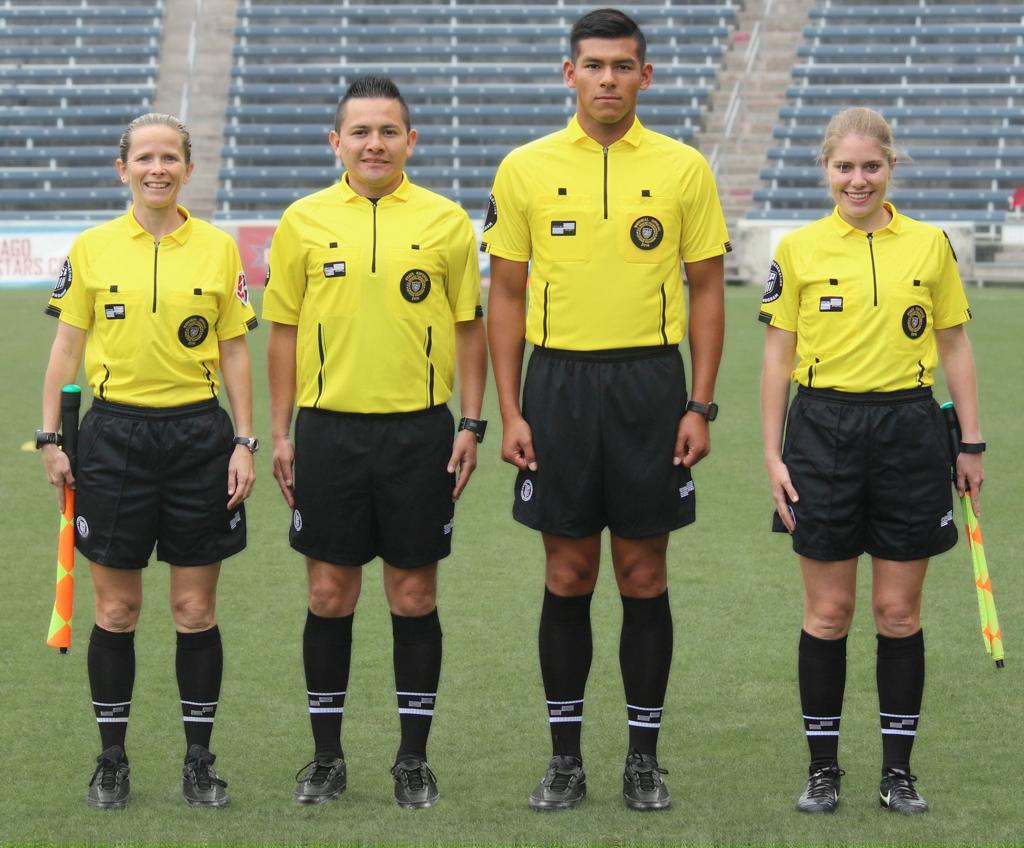
Did the referee have the proper jersey and badge and was the jersey tucked in an worn approriatley
Did the referee wear black shorts
Did the referee wear black socks that were pulled up just below the knee
Uniform/Appearance comments
Comments for the Mentee
Mentor's Recommendation
Mentee is Good to Center Games
Comments for the Assignor
Is this form completed
Yes
Send Mentor and Mentee the assignment
Do you want this form sent to the mentee?
Assignor's Password
Entered Into Ref Base
Assignor's Action
Mentee Profile